National Martyrs’ Monument in Savar: A Symbol of Bangladesh’s Freedom
If there is one place in Bangladesh that captures the nation’s pride, pain, and sacrifice all at once, it is the National Martyrs’ Monument (Jatiyo Sriti Shoudho) in Savar. Rising boldly against the sky just 35 kilometers northwest of Dhaka, this iconic landmark is far more than a piece of architecture—it is the heart of Bangladesh’s story of independence. Whether you are a traveler, a student of history, or someone seeking a deeper connection to the country’s past, visiting this monument is an unforgettable experience.
A Monument Born from Sacrifice
The National Martyrs’ Monument was built to honor the countless men and women who gave their lives during the Liberation War of 1971. The struggle for freedom was long and bitter, marked by moments of courage, resilience, and immense sacrifice. When Bangladesh finally achieved independence, the need for a national symbol became clear—a place where the nation could unite to remember and pay respect.
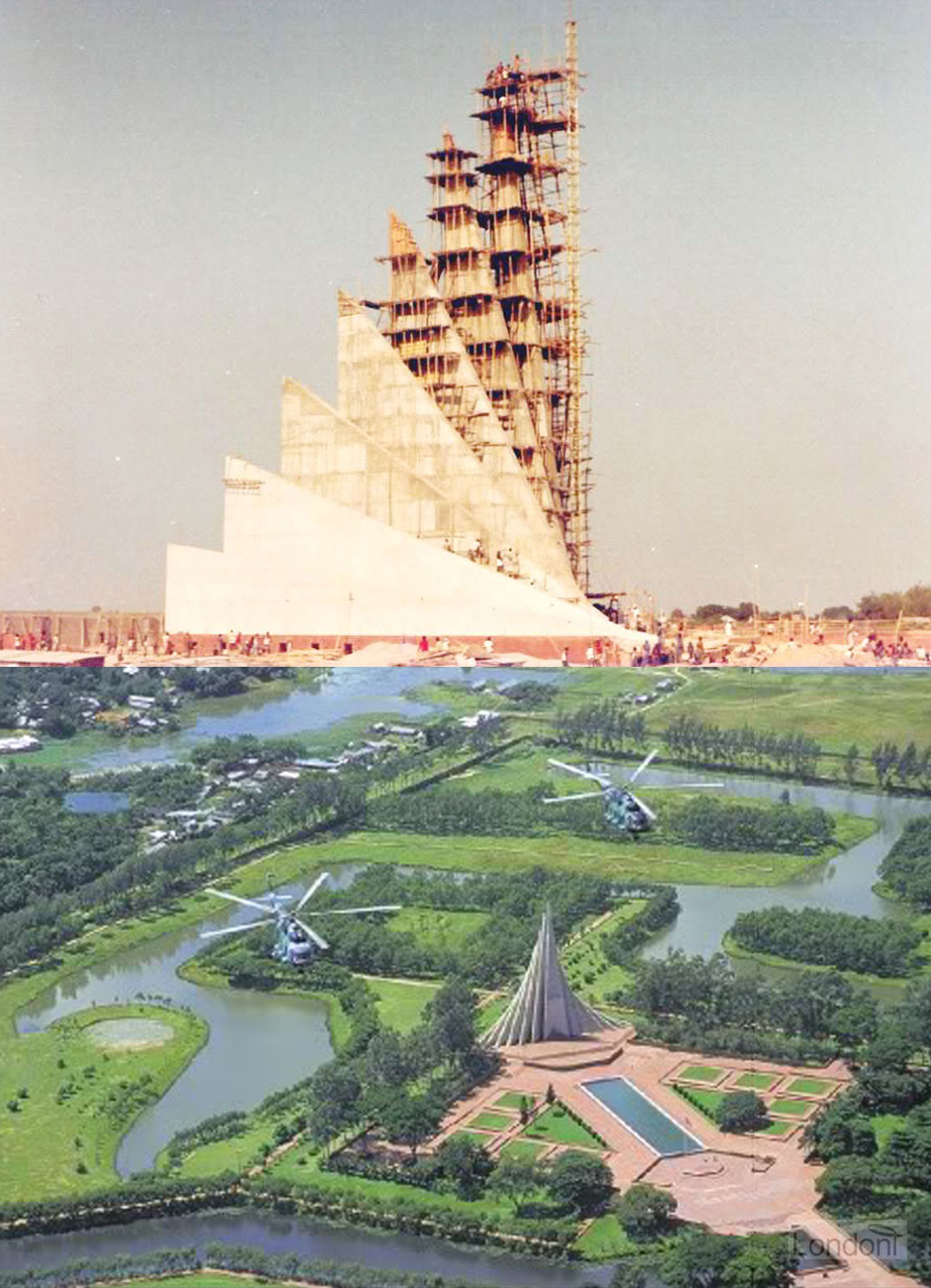
The site in Savar was chosen in the early 1970s, and a design competition was held in 1978. Architect Syed Mainul Hossain’s vision was selected, and construction began soon after. On 16 December 1982, exactly 11 years after victory, the monument was officially inaugurated. Since then, it has stood as Bangladesh’s most recognizable national memorial.
Stunning Architecture with Powerful Meaning
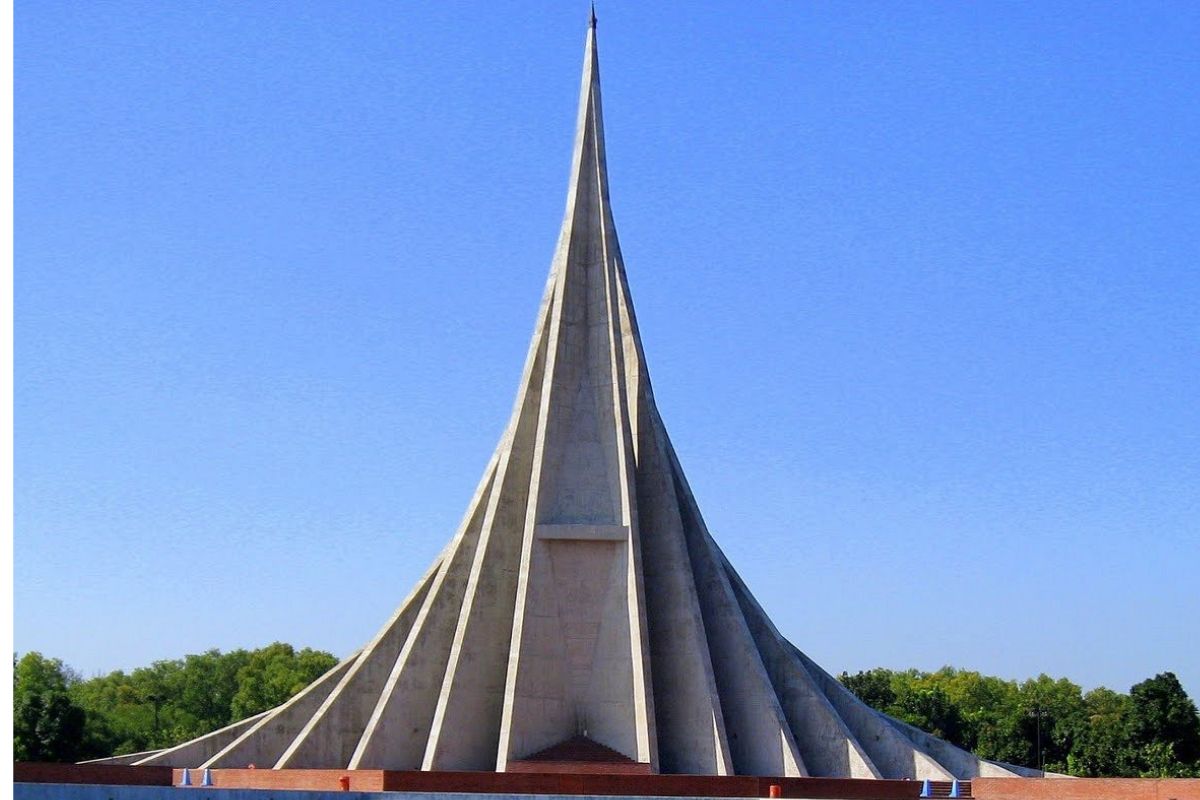
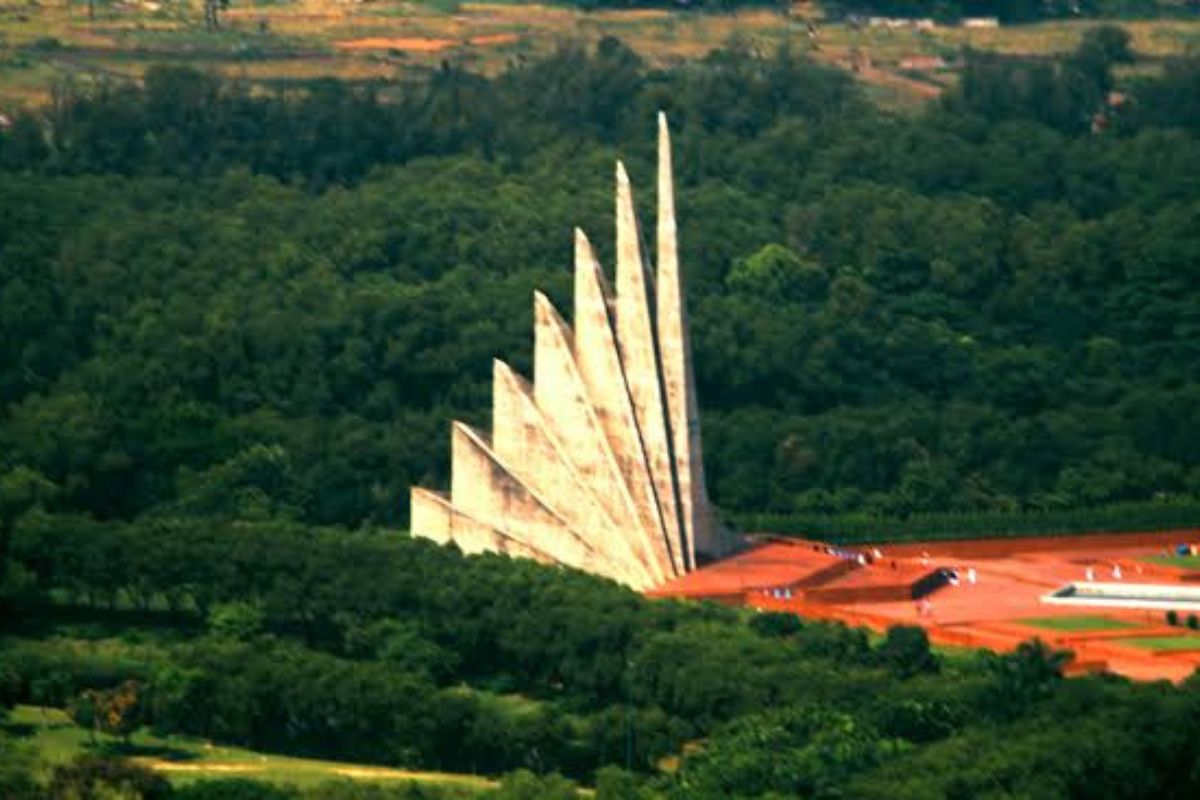
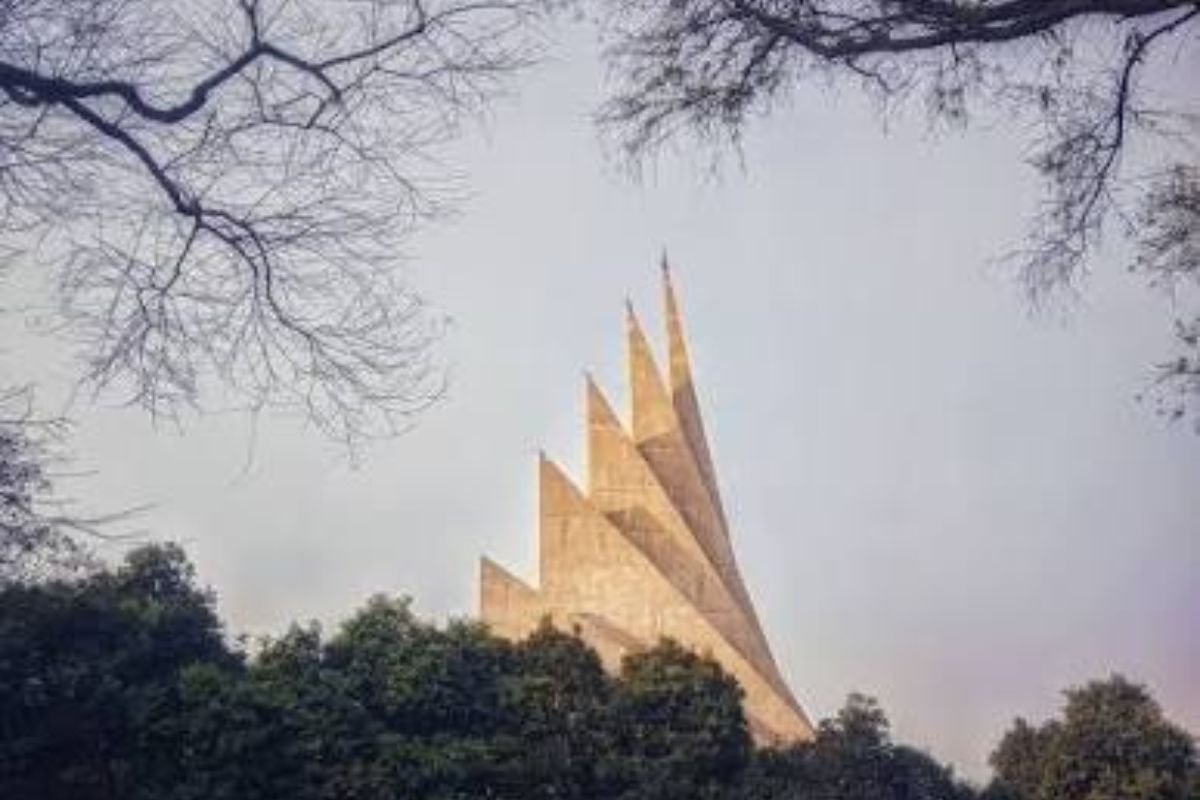
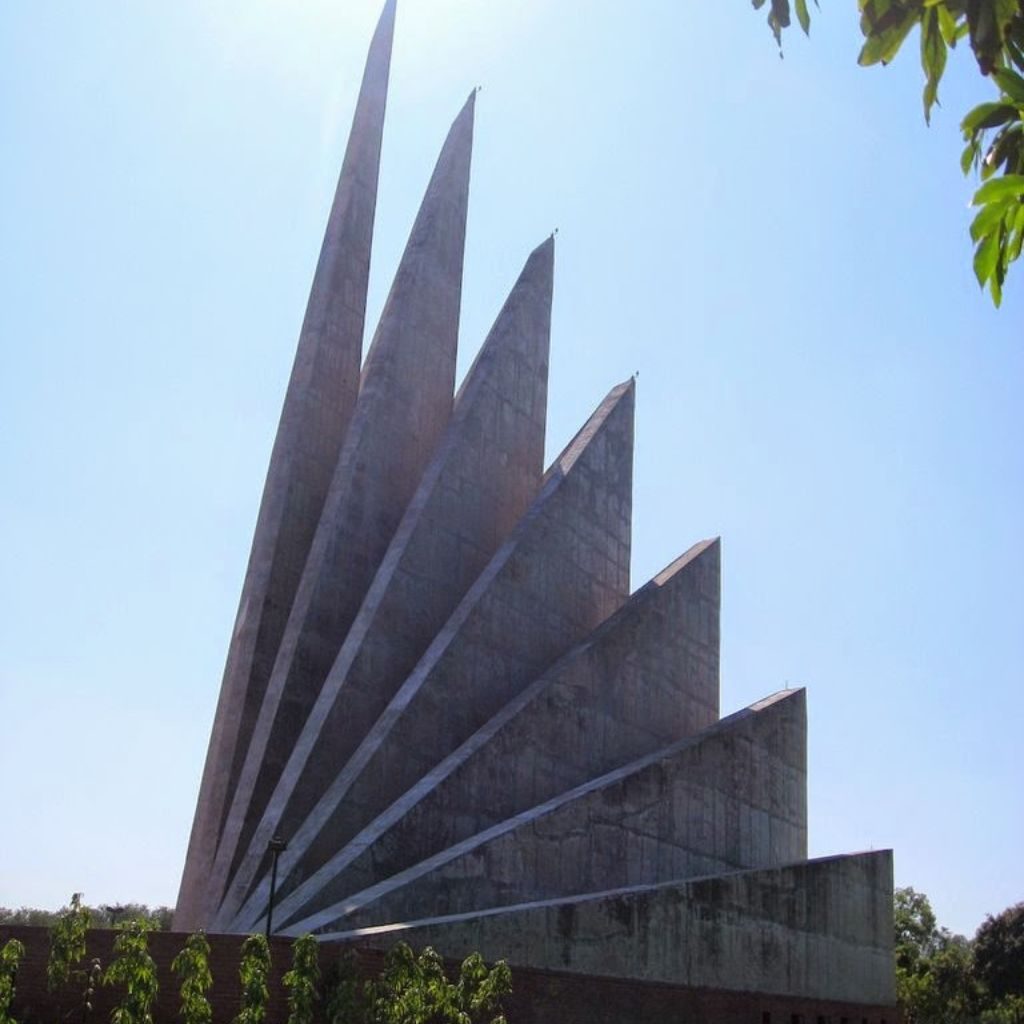
The design of Jatiyo Sriti Shoudho is striking in its simplicity yet rich in symbolism. The structure consists of seven triangular concrete planes, each rising higher than the one in front of it, creating a sharp vertical peak that soars about 150 feet (46 meters) into the air.
Each of the seven planes represents a significant chapter in Bangladesh’s struggle for self-determination:
1952 Language Movement
1954 United Front election victory
1956 Constitution Movement
4.1962 education movement
5.1966 Six-Point Movement
6.1969 Mass Uprising
7.1971 Liberation War
As you walk closer, the planes seem to shift in perspective—sometimes appearing symmetrical, sometimes layered in depth. This deliberate design reflects the complexity of the struggle and the unity that ultimately gave the nation its freedom.
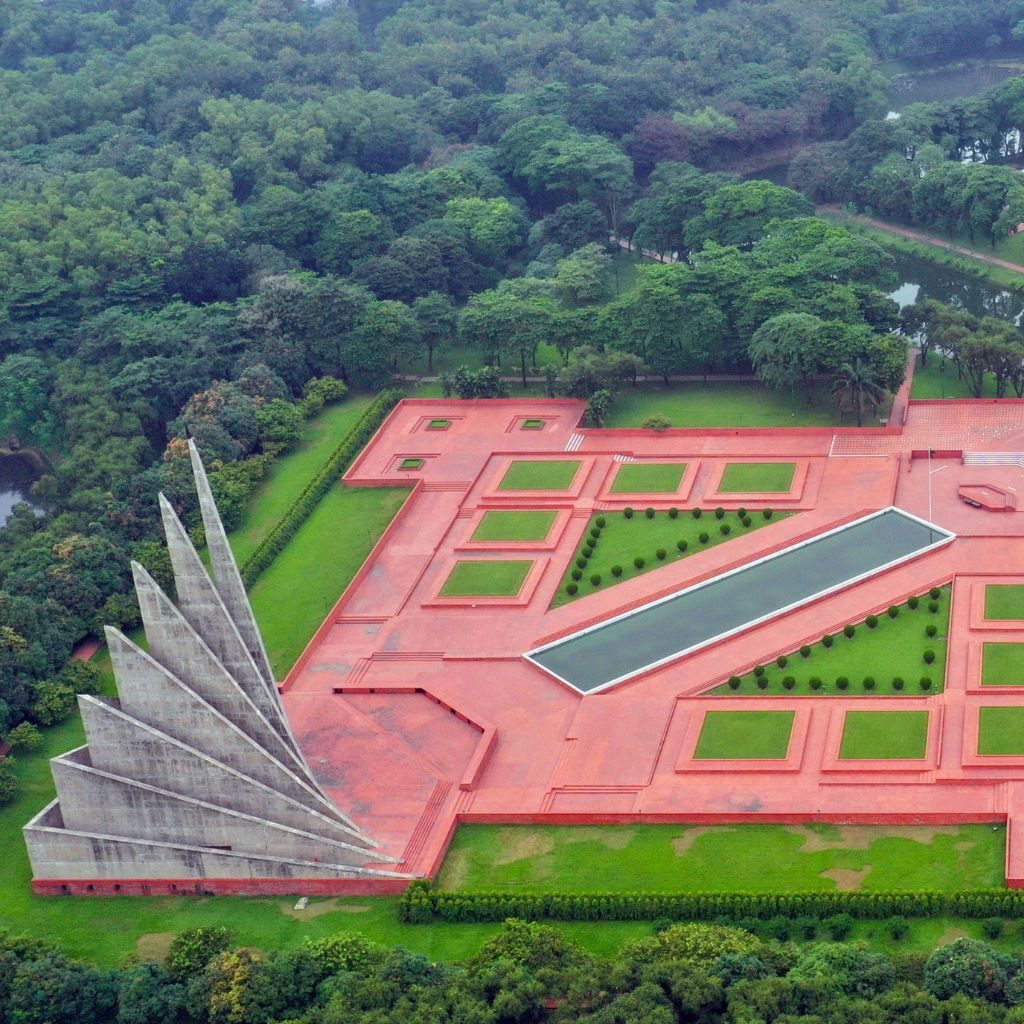
The monument is made of stark white concrete, standing on red-brick platforms and pathways, surrounded by lush green fields and trees. The contrast of colors symbolizes purity, sacrifice, and life—a fitting palette for a memorial.
Walking Through the Complex
Visiting the National Martyrs’ Monument is more than just looking at a tall structure. The entire complex was designed to be experienced as a journey.
Ceremonial Pathway: Visitors enter through a sequence of rising and falling brick courts, symbolizing the ups and downs of the nation’s fight.
Reflection Pool: A calm water body lies in front of the monument, mirroring its towering form. The reflection gives the monument a sense of eternity, reminding visitors of the everlasting spirit of freedom.
Mass Graves: On both sides of the complex are several graves of unknown martyrs. Standing there, one feels the weight of the sacrifice that bought the country’s independence.
Green Fields and Gardens: The site spans more than 80 acres, including gardens, open spaces, and a quiet atmosphere that encourages contemplation.
National Ceremonies and Public Tributes
The memorial comes alive on Victory Day (16 December) and Independence Day (26 March) each year. At dawn, the President, Prime Minister, and other national leaders place floral wreaths at the monument’s base. Afterward, thousands of people from all walks of life arrive with flowers, flags, and prayers. The air fills with patriotic songs, and the monument becomes a living symbol of unity.
Even outside of these occasions, the site is open to the public daily. Many families, students, and tourists visit throughout the year to learn about history, take in the serene environment, and reflect on the sacrifices behind Bangladesh’s freedom.
Visiting Tips
Getting There: The monument is located in Savar, about an hour’s drive from Dhaka, depending on traffic. Local buses, rideshare apps, and private cars can easily get you there.
Entry & Hours: Entry is generally free, and visitors are welcomed during daylight hours (around 8:00 AM – 6:00 PM).
Best Time to Visit: Early morning or late afternoon offers a calmer atmosphere and softer light for photography.
Respect the Place: Since it is a national memorial, visitors are encouraged to dress modestly, speak softly, and avoid littering.
Why You Should Visit
The National Martyrs’ Monument is not just for history buffs—it is a place for every Bangladeshi and every visitor who wants to understand the soul of this nation. The structure may be made of concrete and brick, but its spirit is alive with the stories of courage, resilience, and sacrifice.
Standing before the soaring monument, with the reflection pool at your feet and the graves of martyrs beside you, you cannot help but feel a profound respect for the journey Bangladesh has taken. It is a reminder that freedom was not given, but earned—at the highest cost.
So, if you are in or near Dhaka, make the short trip to Savar. Spend an hour or two walking through the memorial, taking in the architecture, and reflecting on the sacrifices that made today’s Bangladesh possible. It is not just a visit—it’s an experience that stays with you.




Leave a review