Kantajew Temple: A Terracotta Masterpiece in Dinajpur, Bangladesh
Nestled in the quiet village of Kantanagar in Dinajpur, the Kantajew Temple—often called Kantanagar Temple or Kantaji Temple—is one of Bangladesh’s most breathtaking monuments of faith and art. Built nearly three centuries ago, this magnificent shrine is not only a place of worship dedicated to Lord Krishna and his consort Rukmini, but also a living museum of Bengal’s artistic heritage. If you are a traveler looking for history, architecture, and culture all in one place, this temple deserves a top spot on your itinerary.
A Glimpse Into History
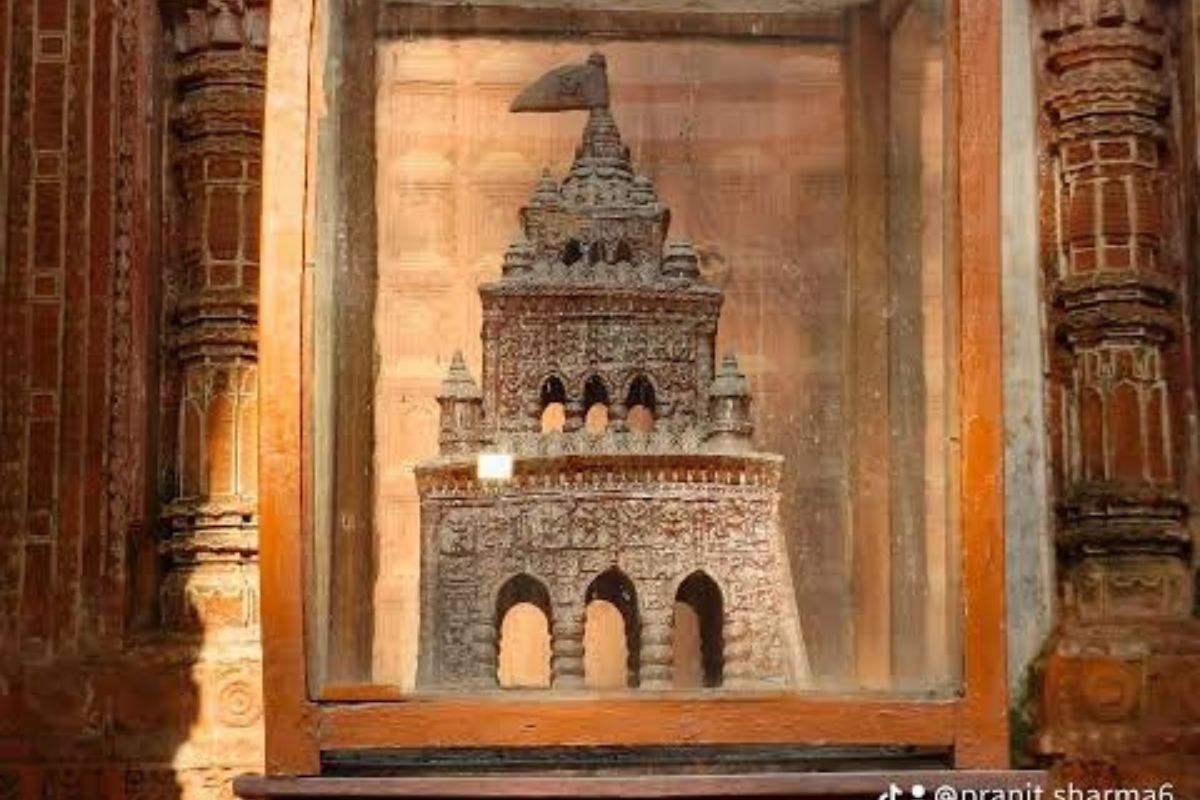
The temple’s story began in 1722, when Maharaja Prannath of Dinajpur laid the foundation. After his passing, the construction was completed in 1752 by his adopted son Maharaja Ramnath. Originally, the temple rose in the form of a grand Nava-Ratna (nine-spired) structure. Sadly, the devastating earthquake of 1897 toppled its nine spires, leaving behind the solid yet elegant body that we see today. Despite this loss, the temple remains one of the finest examples of Bengal’s late medieval temple architecture.
Architectural Grandeur
The first thing visitors notice is the temple’s imposing yet graceful form. Standing on a raised stone plinth, the structure rises through three terraces that create a majestic pyramid-like silhouette. Each level has rows of arched doorways, allowing devotees and visitors to admire the sanctum from all four directions.
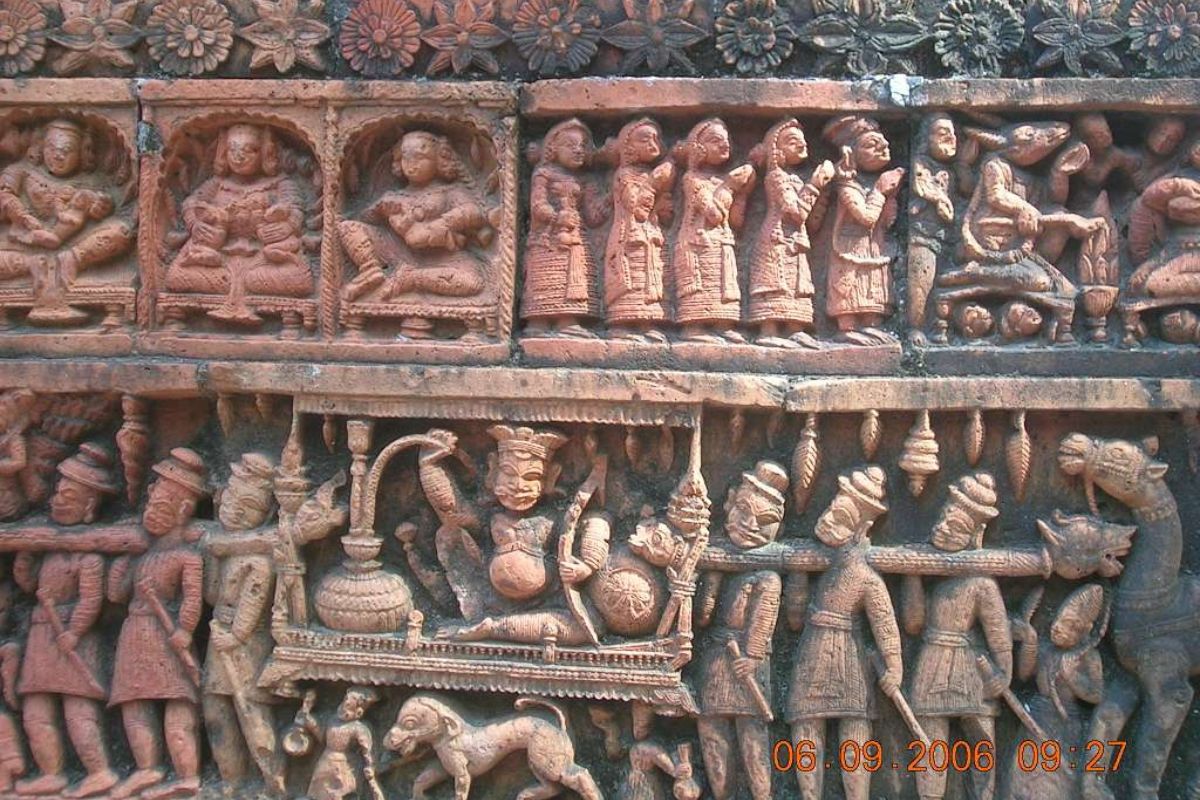
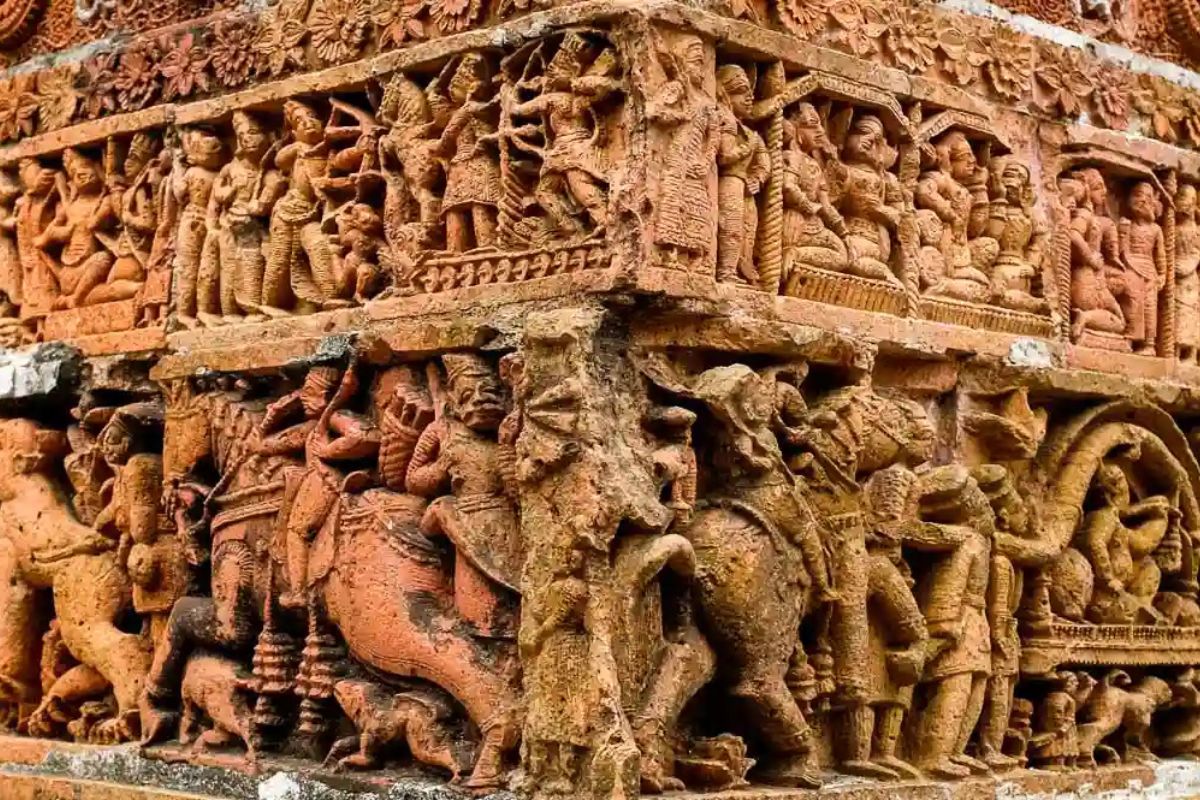
But what truly sets Kantajew Temple apart is its terracotta ornamentation. The walls, pillars, arches, and cornices are covered with thousands of finely crafted terracotta plaques. These panels weave together stories from the Ramayana, Mahabharata, and the life of Krishna—including his playful moments with Radha and his heroic feats like lifting the Govardhan hill. Alongside these religious scenes, you will also spot glimpses of 18th-century Bengal life: noblemen smoking hookah, hunters on horseback, musicians playing instruments, women fetching water, and even European soldiers and ships—evidence of cross-cultural encounters of the time.
Walking around the temple feels like turning the pages of a history book carved in clay. Each plaque has a story, and together they create one of the richest visual archives of Bengal’s social and religious history.
A Living Heritage
Despite being centuries old, Kantajew Temple is not just a relic of the past. It remains a vibrant center of faith and community life. The most celebrated event here is the Rash Mela (Rash Festival), held every year in late November or early December during the full moon of Kartik. For nearly a month, the temple grounds come alive with fairs, devotional music, food stalls, and thousands of visitors from across Bangladesh. The highlight of the festival is the ceremonial procession of Radha-Krishna idols, carried in a palanquin, followed by rituals and prayers that honor centuries-old traditions.
Another important celebration is Dol Jatra (Holi), when the temple becomes a colorful stage of joy, music, and devotion. Visiting during these festivals is a once-in-a-lifetime experience for anyone interested in Bangladesh’s cultural spirit.
Conservation and Recognition
Kantajew Temple has been recognized as a protected monument by the Government of Bangladesh. Its artistic and cultural value is so significant that in 2025, the temple was featured on Bangladesh’s redesigned 20 Taka currency note, symbolizing national pride. Restoration efforts over the years have helped preserve its terracotta glory, though natural wear and time remain challenges.
Planning Your Visit
If you’re planning a trip to Dinajpur, reaching Kantajew Temple is quite convenient. It is located about 19 kilometers north of Dinajpur town, near the Dhepa River. You can easily get there by local transport or a hired vehicle.
Best time to visit: Winter (November–February) offers pleasant weather and the chance to witness the Rash Mela.
Nearby attractions: Pair your visit with Nayabad Mosque, Dinajpur Rajbari (Palace), and Ramsagar National Park for a complete cultural and natural experience.
Travel tips: Wear modest clothing, remove your shoes before entering sacred areas, and respect local customs while taking photos.
Why You Should Visit
Kantajew Temple is more than just a religious site—it is a cultural landmark that showcases the artistry, spirituality, and social life of Bengal three centuries ago. For history buffs, it offers a journey back in time; for art lovers, it is a gallery of terracotta brilliance; and for spiritual travelers, it is a sacred place of devotion.
Whether you are exploring Bangladesh as a tourist or discovering your own heritage, a visit to Kantajew Temple will leave you inspired. Its red-hued terracotta walls under the golden light of sunset tell stories that words cannot fully capture—you simply have to experience them in person.
Tour's Location
Reviews
5/5
Excellent
(11 Reviews)
Excellent
11
Very Good
0
Average
0
Poor
0
Terrible
0
11 reviews on this Tour - Showing 1 to 11
usp_bskr
29/07/2026
0
Услуги SEO продвижения
Какие [url=https://uslugi-seo-prodvizheniya.ru]услуги seo продвижения[/url] можно делать самостоятельно, а какие лучше отдать на аутсорс?
tsp_osKi
25/07/2026
0
Топ SEO продвижение
Что отличает [url=https://top-seo-prodvizhenie.ru]топ seo продвижение[/url] по качеству отчётности и прозрачности?
zps_rtPn
25/07/2026
0
Заказать продвижение сайта
Как правильно сравнить несколько КП перед тем, как [url=https://zakazat-prodvizhenie-sajta.ru]заказать продвижение сайта[/url]?
psvt1_mqKn
22/07/2026
0
Продвижение сайта в топ 10
[url=https://prodvizhenie-sajta-v-top-10.ru]Продвижение сайта в топ 10[/url] — роль Core Web Vitals в 2024 году?
pssozr_ueEn
20/07/2026
0
Продвижение сайта с оплатой за результат
В каких нишах лучше всего работает [url=https://prodvizhenie-sajta-s-oplatoj-za-rezultat.ru]продвижение сайта с оплатой за результат[/url]?
rsz_zsOa
18/07/2026
0
Раскрутка сайтов заказать
Что спросить у подрядчика, когда [url=https://raskrutka-sajtov-zakazat.ru]раскрутка сайтов заказать[/url] планируется впервые?
spz_cjEt
18/07/2026
0
SEO продвижение заказать
[url=https://seo-prodvizhenie-zakazat.ru]Seo продвижение заказать[/url] — что должно быть прописано в договоре?
sppk_gtPi
10/07/2026
0
SEO продвижение под ключ
Как выбрать подрядчика для SEO продвижения под ключ, чтобы не переплатить за формальный пакет? [url=https://seo-prodvizhenie-pod-klyuch.ru]SEO продвижение под ключ[/url]
sos_gyKl
10/07/2026
0
SEO оптимизация сайта
Сколько стоит профессиональная [url=https://seo-optimizaciya-sajta.ru]seo оптимизация сайта[/url] «под ключ»?
psvps_vrOt
10/07/2026
0
Продвижение сайта в поисковых системах
Что делать, если [url=https://prodvizhenie-sajta-v-poiskovyh-sistemah.ru]продвижение сайта в поисковых системах[/url] резко упало после обновления?
spms_wmml
08/07/2026
0
SEO продвижение молодого сайта
Как ускорить [url=https://seo-prodvizhenie-molodogo-sajta.ru]seo продвижение молодого сайта[/url] без риска попасть под санкции?



Услуги SEO продвижения